
Finding a good endocrinologist in Tampa
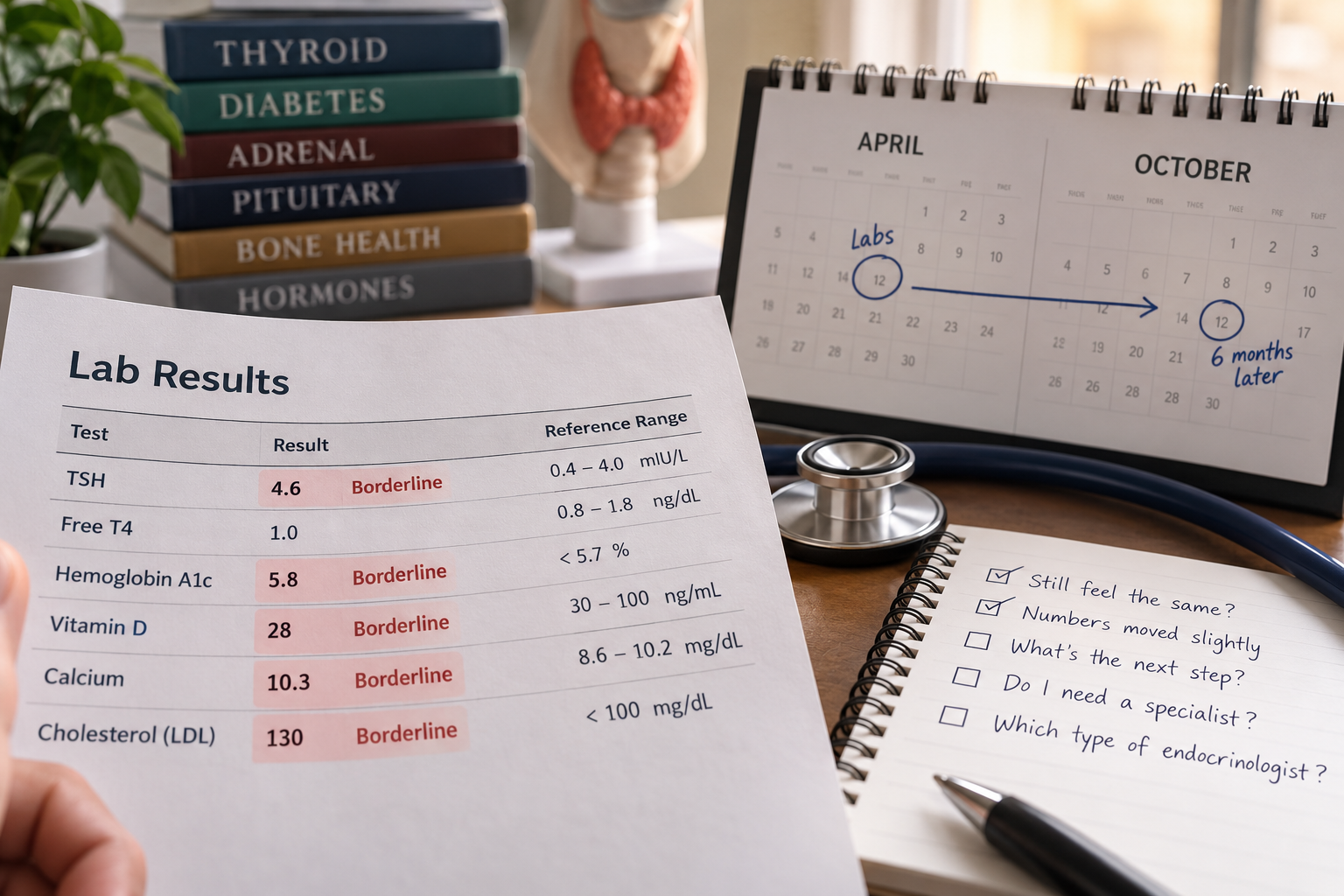
Somebody looked at your labs, said the word "borderline" or "we will keep an eye on it," and sent you home. Six months later nothing has changed except that you feel the same and the number moved slightly.
Here is the useful answer. The right endocrinologist for you depends on which gland or system your problem sits in, because endocrinology covers diabetes, thyroid, bone, adrenal, pituitary and reproductive hormones, and most endocrinologists lean heavily toward one or two of those. Work out which area your numbers point to, then look for someone who spends their week there. If you have been told to monitor something indefinitely without a plan, that is also a reason to get a second set of eyes, which our piece on borderline bloodwork walks through.
Why "manage it" is not a plan
"Manage" can mean three different things. The finding is genuinely stable and watching is correct. The next step requires a specialist nobody has involved yet. Or nobody has decided who owns the problem. Those call for different responses, and you cannot tell them apart without asking.
So ask. "What exactly are we monitoring, how often, and what number or symptom would change the plan?" If the answer is vague, that is information.
The subspecialties, and which problem goes where
Endocrinologists train in internal medicine and then in endocrinology, diabetes and metabolism. Formal subspecialty certificates are rare in this field, so the practical division is by clinical focus rather than credential. Ask the office directly what the doctor focuses on.
Diabetes and metabolic care. Type 1 and type 2 diabetes, insulin management, continuous glucose monitors, insulin pumps, and prediabetes that is drifting. Also gestational diabetes. If your blood sugar is the main issue and your primary care doctor has run out of adjustments, this is the lane.
Thyroid. Hypothyroidism and hyperthyroidism, Hashimoto's, Graves' disease, goiter, thyroid nodules, and thyroid cancer follow up. Thyroid nodule evaluation involves ultrasound and sometimes fine needle biopsy, and some endocrinologists perform that in office while others refer out. Worth asking.
Bone and mineral metabolism. Osteoporosis, osteopenia, fractures that happened too easily, vitamin D problems, abnormal calcium, and parathyroid disease. Abnormal calcium in particular is frequently left sitting on a lab report for years.
Pituitary and neuroendocrine. Pituitary tumors, prolactin problems, acromegaly, Cushing's disease, and diabetes insipidus. A small field that usually works alongside neurosurgery.
Adrenal. Adrenal nodules found incidentally on a scan, adrenal insufficiency, aldosterone related high blood pressure, and pheochromocytoma. An adrenal nodule spotted on a CT done for something else is a common reason people land here.
Reproductive and gonadal endocrinology. Polycystic ovary syndrome, low testosterone, menstrual irregularity tied to hormones, and gender affirming hormone care. Note that reproductive endocrinology and infertility is a separate specialty under obstetrics and gynecology, so if fertility is the goal, that is a different door.
Obesity and weight medicine. Metabolic evaluation and medication management, often coordinated with nutrition and sometimes with bariatric surgery.
Lipids. Severe or inherited cholesterol disorders. Overlaps with preventive cardiology, and either door can be correct.
One more thing. Fatigue, weight change and brain fog are sent to endocrinology constantly, and often the thyroid is not the answer. Our piece on persistent fatigue and which specialists investigate it covers how that workup gets divided.
What to ask when you call, and at the first visit
- "What does this doctor focus on? Mostly diabetes, mostly thyroid, or something else?"
- "My labs showed [the specific test and number]. Is this the right doctor for that?"
- "Do you do thyroid ultrasound and biopsy in the office, or do you refer that out?"
- "Do you work with a diabetes educator or dietitian in this practice?"
- "Is there a cancellation list I can be on?"
- "What are we actually treating, and what is the target?"
- "If this number stays the same for a year, do we change anything?"
- "Which of my symptoms would you expect to improve, and in what timeframe?"
- "What labs do you want next, and will you send results with an explanation or just a number?"
Credentials and signals that genuinely matter
Board certification in endocrinology, diabetes and metabolism. Confirms completed internal medicine and endocrinology training plus a passed exam. It is the baseline and it is checkable.
Clinical focus. Because subspecialty certificates barely exist here, the honest proxy is what the doctor sees all day. A practice that describes itself as a thyroid and nodule center is telling you something real.
Whether procedures are done in house. Thyroid ultrasound and fine needle aspiration are the common ones. Doing them in house usually means fewer appointments and less waiting.
Hospital affiliation. Less central in endocrinology than in surgical fields, since most care is outpatient, but it matters if you are ever admitted. Tampa General, AdventHealth, Moffitt and BayCare are the major systems in Hillsborough and Pinellas.
Team around the doctor. Diabetes educators, dietitians and pharmacists change outcomes in chronic hormone care more than most people expect. Ask who else you will see.
Insurance participation and supply coverage. Endocrinology involves ongoing prescriptions, monitors and test strips, and coverage rules drive a lot of the practical experience. [VERIFY: confirm with your insurer which continuous glucose monitors, pumps and medications are covered under your plan and what prior authorization is required]
Communication between visits. Chronic hormone management runs on lab results arriving between appointments. Ask how results are communicated and how long a portal message takes to get answered.
What to bring to the first appointment
Bring every lab result you have on the relevant system, going back as far as you can get it, because the trend over years is often more informative than today's value. Bring your medication list with doses, including anything over the counter, biotin supplements, and thyroid products, since some supplements interfere with lab tests. Bring blood sugar logs or monitor data if diabetes is the issue. Bring any imaging reports, including the CT or ultrasound that found a nodule. Bring a short written list of symptoms with rough start dates. Bring your insurance card and pharmacy information.
If your records are scattered across a primary care office, an urgent care and a lab company, start requesting them a few weeks before the visit. Records moving slowly is the single most common reason a specialist visit accomplishes nothing, which our explainer on what a referral is and why it stalls gets into.
How to verify any of this yourself
The ABMS certification lookup confirms board certification in endocrinology, diabetes and metabolism. The Florida Department of Health license verification shows license status and public disciplinary action. Medicare Care Compare carries federal information on physicians and facilities. Clinical focus is not in any registry, so ask the office directly.
Browse specialty specific physician information here: [LINK: Compass physician directory, endocrinology page]
Endocrinology appointments in the Tampa Bay area are often booked far out, and the records chase is real work. Compass Health is a membership service that handles that part for members, including identifying which endocrinology focus fits your labs, getting the appointment booked, and making sure the years of prior results actually arrive before the visit. Your own physician remains the authority on what your numbers mean.
📞 (813) 567-8778 · 🌐 thecompasshealth.com